
「ニュートリノによる宇宙創生の解明」横断型フェローシップ
本国際先導研究では、ニュートリノ、暗黒物質、宇宙背景放射、宇宙物理の複数の実験・理論研究分野において多様な研究経験を積みながら、広い視野と国際的な研究遂行能力を備えた若手研究者の育成を目指し、横断型フェローシップを設けています。本フェローシップでは、若手研究者がそれまでの大学院博士課程等で従事してきた研究分野から新たな研究に積極的に取り組み、経験やスキルの幅を広げることを支援します。またフェローシップは本国際先導研究の活動にも積極的に参画します。
第1回横断型フェローシップ公募
本公募は 2025年6月9日(月) をもって終了しました。[詳細]
フェローの紹介
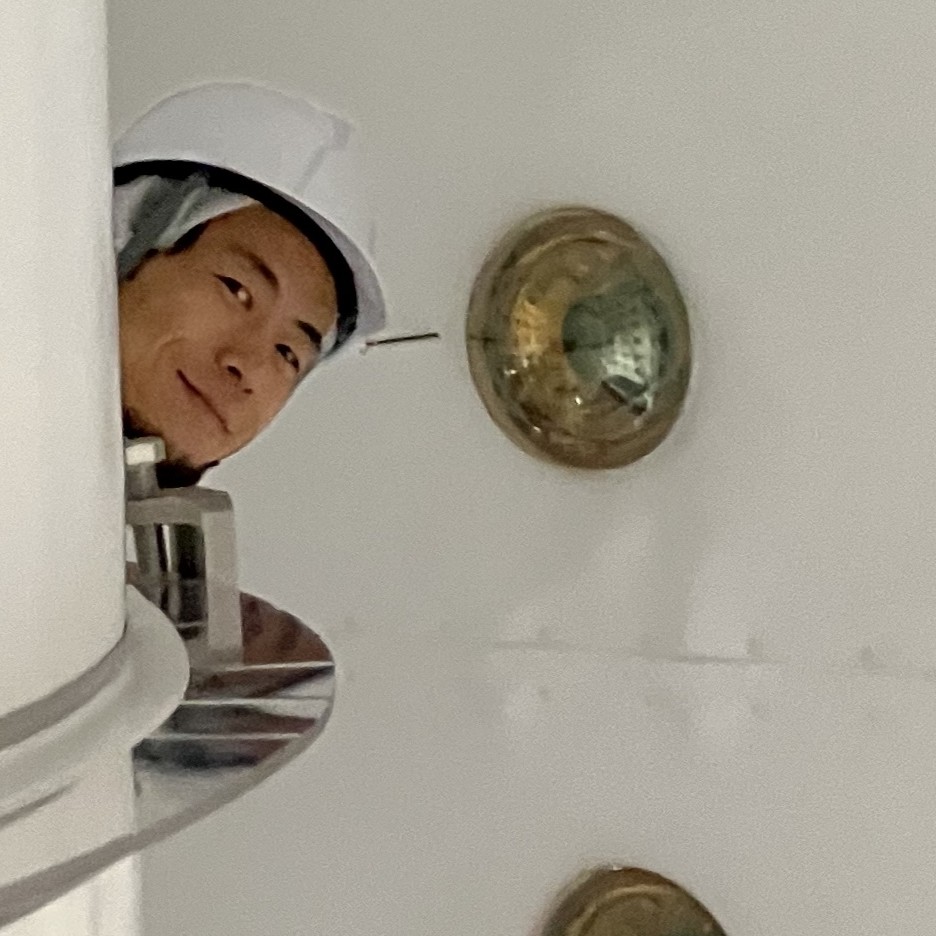
ICRR, The University of Tokyo
Research Topics
Dark Matter direct search
Detector development for underground experiments
Introduction
I am a postdoctoral researcher at ICRR Kamioka for the XENONnT dark matter experiment. My research interest is exploring physics beyond the Standard Model through underground experiments, particularly on detector development and hardware-oriented approaches.
During my PhD at Kyoto University, I was involved in the development of a high-pressure gas xenon time projection chamber (TPC) for the AXEL experiment, which is aimed to search for neutrinoless double beta decay. My focus was the design and operation of a strong and uniform drift electric field inside the TPC. I was struggling to deal with spark discharge, but we eventually achieved stable operation and demonstrated high detector performance like the world-best energy resolution as a xenon detector at that time.
As a postdoc, I changed my field to dark matter search, the XENONnT experiment. XENONnT is also based on a xenon TPC but with liquid-gas dual phase configuration. Though they are both TPCs, the difference of its phase (gas or liquid) makes different detector characteristics such as light and charge yields, event topologies, and self-shielding capabilities. I am really enjoying to learn both the difference and commonalities between them. From now, I will work on establishing new calibration method using a neutron generator and applying the improved calibration result to low-mass WIMP search.
In my free time, I love playing poker and practicing Japanese archery (Kyudo).

IPMU, The University of Tokyo
Research Topics
Astroparticle Physics Neutrino physics
High Energy Astrophysics
Introduction
I am a postdoctoral fellow at IPMU working with the Hyper-K collaboration. Although my current research interests revolve around preparing Hyper-K to find galactic and extragalactic sources of high-energy neutrinos, my path into astrophysics was anything but linear. As an undergraduate at UC Berkeley, I studied starspots with Professor Gibor Basri and participated in the University of Tokyo Research Internship Program (UTRIP) where I researched stellar rotation periods with Professor Yasushi Suto. I then briefly pivoted to biophysics during my master’s degree before finding my way back to astrophysics through my Ph.D. work with Professor Naoko Kurahashi-Neilson and the IceCube Collaboration, where my thesis focused on creating a statistically sound method to combine datasets with unique event topologies and search the entire sky for sources of astrophysical neutrinos.
Outside of neutrinos, I enjoy video games, makeup, learning kanji, and snowboarding!